
How to Manage Dietary Needs on Group Trips
Editorial Team · 2 November 2026 · 11 min read

Last Updated: 2 November 2026
Quick Summary
Managing dietary needs on group trips starts with a written questionnaire sent before anyone books. Collect allergies, intolerances, diet types and medical needs in one shared document. Then plan meals around the most restrictive need, and tell every restaurant about allergies when you book and again on arrival.
- Send a dietary requirements questionnaire before anyone books flights or accommodation.
- Name each allergen and how severe the reaction is.
- Plan shared dinners around the most restrictive need, not the loudest voice.
- Keep a self-catering fallback for every dinner, such as plain pasta and tinned beans.
- Print one dietary communication card per person in the local language.
Table of Contents
- Why Dietary Needs Get Missed on Group Trips
- Using a Dietary Requirements Questionnaire for Group Trips
- Group Trip Meal Planning Around Different Diets
- How to Communicate Dietary Requirements to Restaurants
- Packing Food for Travel With Dietary Restrictions
- Handling Group Pressure, Budgets and Shared Food Costs
- Setting Up Your Group's Dietary Plan Before You Depart
- Frequently Asked Questions
Why Dietary Needs Get Missed on Group Trips
Dietary needs often slip through the cracks on group trips. One person mentions a nut allergy in passing, and by the time the restaurant is booked, nobody remembers it. Most groups plan around the loudest voice rather than the most restrictive need, and that gap is where problems start.
A common reason is that everyone assumes someone else has passed the message on. The organiser thinks the friends will speak up at dinner, while the friends assume the organiser has already sorted it. Small details like cross-contamination, hidden dairy or a strict vegan diet get lost in the rush.
Watch out: a single missed allergy at a shared table can become a medical emergency, so confirm every severe allergy in writing before you travel.
Managing dietary needs well starts with writing everything down early. The sections below show how to collect requirements, plan meals, communicate with restaurants and keep the whole group happy.
Using a Dietary Requirements Questionnaire for Group Trips
A dietary requirements questionnaire is the simplest way to collect accurate information from everyone. Send it before anyone books flights or accommodation. This gives you time to plan properly.
Ask each traveller for the following: compare flight fares before you finalise the trip plan.
- Allergies: Name each allergen and how severe the reaction is
- Intolerances: Lactose, gluten, or other foods that cause discomfort
- Diet type: Vegetarian, vegan, halal, kosher, or low-carb
- Medical needs: Any condition that affects eating, such as diabetes
- Preferences: Foods someone dislikes but can eat safely
- Emergency supplies: Any medication or snacks they carry
Keep answers in one shared document so everyone can see them. Update it whenever someone's needs change. A clear record makes every later step easier, from choosing accommodation to ordering at restaurants.
Group Trip Meal Planning Around Different Diets
Good group trip meal planning means finding a flexible structure that suits everyone, rather than trying to force one menu on the whole group. The most reliable pattern is a hybrid: a self-catering base for breakfasts and most lunches, with a handful of shared dinners out.
Start by mapping the trip day by day. For each day, note whether breakfast, lunch and dinner will be self-catered, eaten out or eaten on the move. Then apply these rules:
- Anchor each day with a safe breakfast. Oats, eggs, fruit and yogurt suit most diets and can be prepared in bulk. Let people add their own toppings so vegans, coeliacs and dairy-free travellers are all covered.
- Plan shared dinners around the most restrictive need, not the loudest voice. If one person has a severe nut allergy, choose restaurants that can guarantee nut-free preparation rather than asking that person to sit out.
- Keep a self-catering fallback for every dinner. Even with bookings in place, keep plain pasta, rice, tinned beans and frozen vegetables in the apartment so nobody goes hungry if a restaurant falls through.
- Batch-cook one or two group meals. A chilli, curry or traybake can be made in two versions, one base recipe, with allergens and meat added separately at the table.
- Check local supermarket stock before you arrive. Search the nearest large supermarket online and confirm it carries the specific brands or free-from ranges your group needs.
Protein and other macronutrients matter more on travel days than at home, because long transfers and disrupted routines make it easy to subsist on bread and coffee. Aim for a palm-sized portion of protein at each main meal, eggs, fish, chicken, tofu, lentils, Greek yogurt or cheese, depending on the diet.
Budget planning belongs in this step too. Agree before departure whether the group will run a shared food kitty, split bills evenly, or have each person pay for their own specialist items. A common pattern is a fixed daily contribution per person for shared groceries and group dinners, with personal snacks and medical foods excluded.
Group dynamics are the part most guides ignore. Being the only vegan or coeliac in a group can feel socially awkward, and people often under-report their needs to avoid seeming difficult. Set the tone on day one: state that everyone's requirements are non-negotiable and that nobody has to justify their diet.
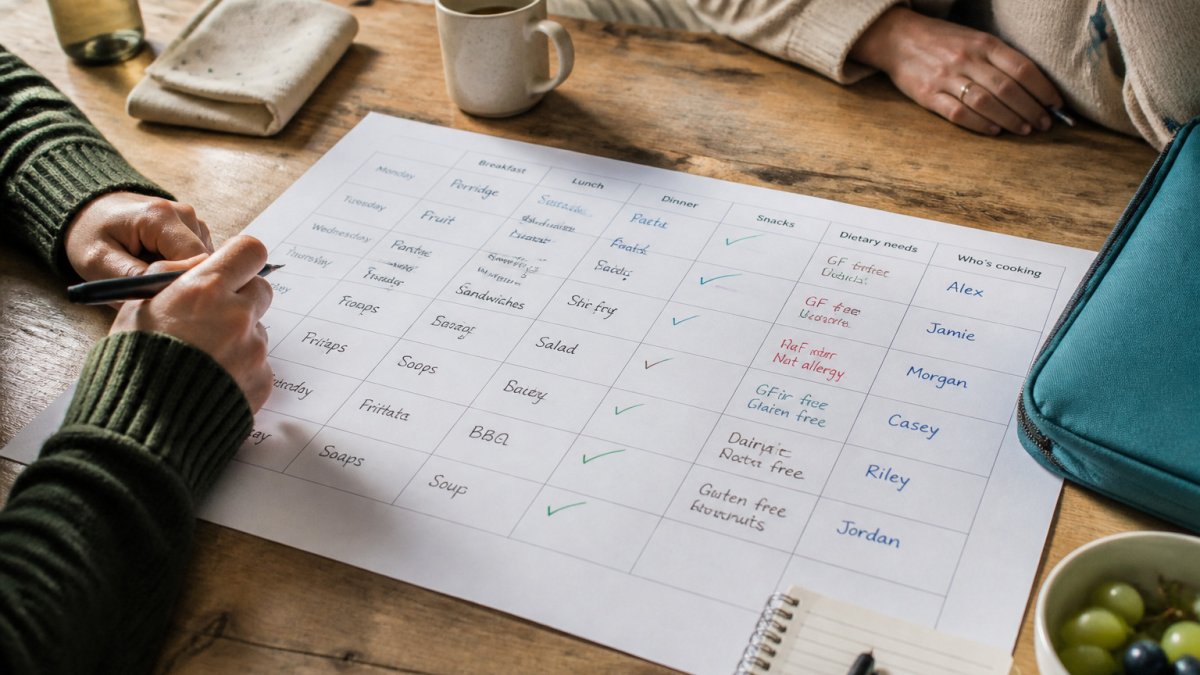
Digital tools make this lighter. A shared note or spreadsheet works for the plan itself, while apps such as a group-expense tracker handle the kitty.
The table below sets out the main meal-planning rules from this section, so you can see the approach at a glance.
| Rule | Why it matters | How to apply it |
|---|---|---|
| Anchor each day with a safe breakfast | Suits most diets and can be made in bulk | Let people add their own toppings |
| Plan shared dinners around the most restrictive need | Avoids leaving one person out | Choose restaurants that can guarantee nut-free preparation |
| Keep a self-catering fallback for every dinner | Stops anyone going hungry if a booking falls through | Stock pasta, rice, tinned beans and frozen vegetables |
| Batch-cook one or two group meals | Covers several diets from one base recipe | Add allergens and meat separately at the table |
| Check local supermarket stock before arriving | Confirms your group's brands or free-from ranges are available | Search the nearest large supermarket online |
| Aim for a palm-sized portion of protein per main meal | Keeps energy steady on travel days | Use eggs, fish, chicken, tofu, lentils or Greek yogurt |
How to Communicate Dietary Requirements to Restaurants
Clear communication with restaurant staff prevents most dining mistakes. Tell the restaurant about each dietary need when you book, and mention it again when you arrive. Use exact terms, not vague ones. "No dairy" is clearer than "not much cheese."
Follow these steps for each restaurant visit:
- Book ahead and note the group's dietary needs in the booking request
- Confirm the details by phone or email a day before
- Tell the server about allergies first, before ordering
- Ask about preparation, such as shared fryers or cutting boards
- Check the bill matches what was ordered
For severe allergies, ask the kitchen directly and avoid buffets, where cross-contamination is harder to control.
Dietary Communication Cards for Different Languages
When travelling abroad, language can be the biggest barrier. A dietary communication card is a printed note that explains each restriction in the local language. Hand it to the server, who can show it to the kitchen.
Include on each card:
- The restriction in the local language, for example "I cannot eat peanuts or peanut oil"
- A line stating the allergy is severe, if relevant
- A short list of foods to avoid
- A brief note on what the person can eat
Print one card per person. Many restaurant staff find cards quicker and clearer than trying to explain on the spot.
Packing Food for Travel With Dietary Restrictions
Packing food is essential when you cannot rely on finding suitable meals, and a diet-specific checklist is the fastest way to get it right.
Gluten-free: sealed oatcakes, rice cakes, gluten-free protein bars, plain nuts and seeds, dried fruit, gluten-free instant porridge pots, and a small bottle of tamari sachets. Check labels for "may contain" warnings if you are coeliac, as manufacturing lines vary by country.
Vegan: roasted chickpeas, peanut or almond butter sachets, vegan protein bars, dried edamame, oatcakes, instant noodles that are confirmed vegan, and a small shaker for plant-based protein powder.
Nut-free: seed butter instead of nut butter, sunflower and pumpkin seeds, dried fruit, oatcakes, and nut-free cereal bars. Read every label, because "may contain nuts" warnings are common on otherwise safe snacks.
Dairy-free: dairy-free milk powder or UHT cartons, dairy-free cereal bars, plain crackers, dried fruit and tinned fish if you eat it.
Low-carb or diabetic-friendly: nuts, cheese portions if refrigeration is available, boiled eggs for the first day, olives, and low-sugar protein bars.
Beyond the diet-specific items, every group should carry a shared emergency kit: a small bottle of hand sanitiser, wet wipes, a tin opener, sealable bags, and a copy of each person's allergy information.
Watch out: airline and customs rules vary widely. Check the destination's rules before you fly, and declare anything you are unsure about.
UK government foreign travel advice on taking food and medicines abroad
A packing checklist pays off twice: it reduces the chance of a hungry, unwell traveller on arrival, and it gives the group a shared reference so nobody assumes someone else has packed the essentials.
Handling Group Pressure, Budgets and Shared Food Costs
Group pressure is a real challenge. Someone may feel awkward asking for a special meal, or others may tease them for being fussy. Set the tone early by saying that everyone's needs matter and that nobody has to justify their diet.
Money adds another layer. Shared food costs can get messy if one person eats far less or buys separate items. Many groups set up a shared food kitty with a fixed amount per person, then track spending in a simple app or spreadsheet. Agree on how to split costs for eating out, and decide whether people with specialist foods pay extra. Talking about this before you travel prevents resentment later.
Setting Up Your Group's Dietary Plan Before You Depart
Before you leave, bring everything together into one written plan. You can also read how gonaija.net books trips and vets its suppliers before committing. Include the questionnaire answers, the meal plan, the restaurant contacts, the communication cards and the food kitty rules. Share the plan with every traveller so nobody is caught out.
Finish with a short check:
- Has everyone completed the questionnaire?
- Is accommodation chosen with suitable cooking facilities?
- Are restaurant bookings noted with dietary needs?
- Are communication cards printed?
- Is the food kitty agreed and set up?
With a clear plan in place, managing dietary needs on group trips becomes far less stressful. You can concentrate on enjoying the holiday together. When you are ready to plan the travel side of your trip, you can search flights and stays to suit your group's needs.
Frequently Asked Questions
How do you ask a group about dietary requirements before a trip?
Send a short dietary requirements questionnaire for group trips as soon as the itinerary is confirmed. Ask for allergies (flagged separately from preferences), intolerances, religious or cultural requirements, and any medical conditions that affect eating. Give a deadline about three weeks before departure so you have time to act on the answers. Keep responses in a shared document so everyone can see how the group's needs fit together and plan meals around them.
How far in advance should you tell restaurants or accommodation about dietary needs?
Tell accommodation at the time of booking, and contact restaurants at least 48 hours before a planned group meal. Larger groups or set-menu dinners may need a week's notice. Confirm the request again on arrival and name the dietary need clearly rather than assuming staff will understand a general term like gluten-free. Written confirmation from the venue, where available, is the safest way to avoid problems at the table.
What should you do if a restaurant cannot accommodate an allergy?
Do not eat there if you cannot get clear, reliable information about the dish. Ask whether the kitchen can prepare a separate meal with dedicated utensils and cooking surfaces. If the answer is no or unclear, choose another venue or eat before you go out and order sides or drinks only. Carry an allergy card in the local language and, for severe allergies, keep prescribed medication with you at all times.
What food should you pack for a journey if you have dietary restrictions?
Pack shelf-stable snacks that meet your requirements, such as nuts, seeds, dried fruit, rice cakes or protein bars with clear labels. Check the rules on carrying food through airport security and across borders before you pack, as some items may be restricted. Bring enough to cover travel days and possible delays, plus a small reserve for the first day at your destination while you locate local supermarkets.
Ready to plan your next group trip? Start your search with gonaija.net and find flights and stays that suit everyone at the table.
